
A 1968 Dodge Charger R/T, Imported From Rural Indiana
- Vasilis Kasiotis
- Jul 12
- 2 min read
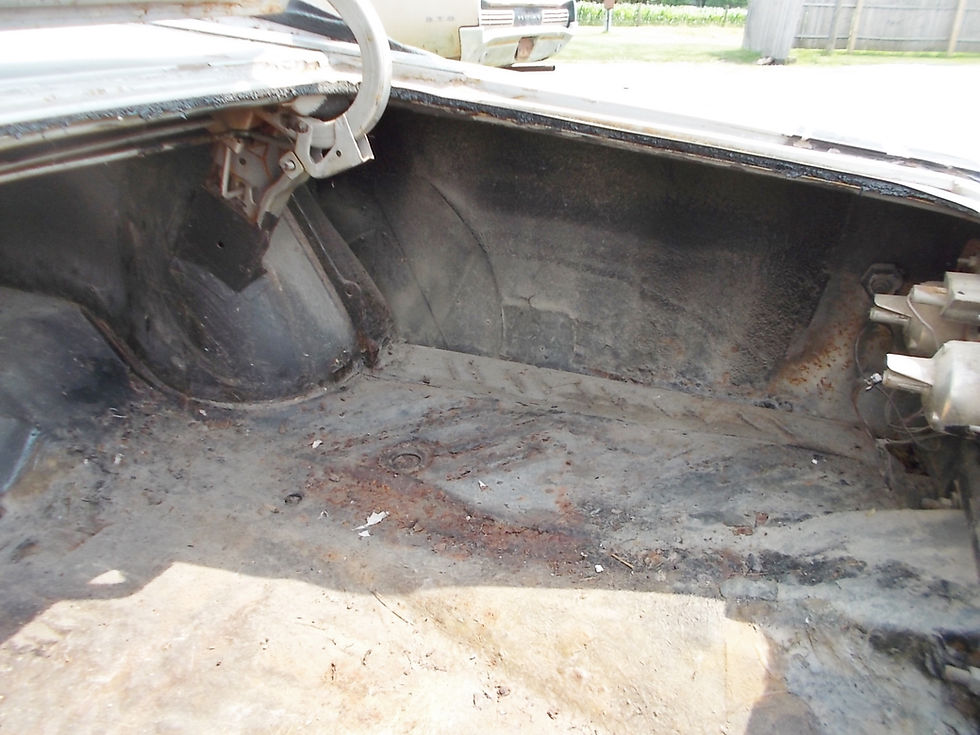
The car was found sitting in a field in rural Indiana. The inspection photos we took before agreeing to buy it tell the real story: surface rust along the trunk lid edges, heavier corrosion on the rear leaf springs and the underside, a body that had clearly spent years outdoors. Nothing hidden, nothing dressed up for a sale — which is exactly what we want to see before committing to a project like this. It lets us plan the actual scope of work instead of discovering it halfway through.

What made this particular car interesting wasn't only the R/T badge. It came with its original Indiana certificate of title, first issued in the 1980s, odometer reading a little over 30,000 miles at the time. Paperwork like that doesn't guarantee anything about condition, but it does confirm the car's history isn't guesswork.
Once it arrived at the shop, the process was the same one we use on every full restoration: complete nut-and-bolt disassembly, every part catalogued and separated for cleaning or replating, the shell mounted on a rotisserie so we can work every angle without fighting gravity. Paint and surface rust come off with paint remover and mechanical methods — no sandblasting, because blasting can warp thin original steel, and we would rather spend the extra hours than risk the panels. By April 2016, the rear of the shell was already down to bare metal, and the repair work on the rear valance and bumper mounts was underway.
A restoration like this doesn't move in a straight line, and we're not going to pretend this one is finished — it isn't, not yet. But the record on this car, from the rusted leaf spring in an Indiana field to the bare-metal shell on our rotisserie, is a fair example of what "full restoration" actually looks like before the paint goes on: mostly patience, mostly metal work, and a lot of photographs nobody sees until we're ready to show them.


Comments